Pipes & One Hitters
How to Clean a Pipe (Glass, Metal and One Hitters)
By Alex MelenUpdated 13 min read

In this guide
Quick answer: To clean a glass pipe, put it in a zip bag with 91% or stronger isopropyl alcohol and a spoonful of coarse salt, shake for a minute or two, let it soak for about 30 minutes, then rinse with warm water and let it dry completely. If you'd rather skip the alcohol, soak glass overnight in a plant-based cleaner. Aluminum pipes and one hitters get isopropyl only. Soak for at least 20 minutes, run a pipe cleaner through the bore, rinse warm and let it dry fully.
You light up, pull, and get almost nothing. Then a little more than you wanted, and it tastes like last month. You hold the pipe up to the window and the glass you bought because it was clear has gone the color of weak tea.
That's resin, and every pipe gets it. Smoke cools on its way through, and the sticky part of it stays behind on the walls, in the bowl and in that narrow bit of airway right where the mouthpiece starts. It comes off easily, as long as you match the method to the material. Glass and aluminum each need slightly different treatment, and so do pieces made of both. Most guides skip that part.
This guide covers glass and metal hand pipes, one hitters, dugouts, chillums and bubblers. If you're here for a wooden tobacco pipe, the process is different and a pipe tobacconist will steer you better than we can.
Why Clean a Pipe, and When
A dirty pipe does its job worse every week, slowly enough that you stop noticing. The airway narrows, so the draw gets harder. Old residue heats up along with fresh herb, and you taste it. Ash and small pieces start pulling through instead of staying in the bowl. Leave it long enough and the bore clogs completely.
You'll usually know it's time when your pipe:
- takes more effort to pull through than it used to
- tastes harsh or stale, even with fresh herb
- has dark buildup you can see in the bowl or the stem
- has a carb hole or mouthpiece that's starting to close up
- smells, even when it's sitting in a drawer
How often comes down to how often you use it. Most people do well with two levels. After a session, do a quick clean. Knock out the ash and run a pipe cleaner through. It takes thirty seconds. Then a deep clean about once a week if you use it daily, or every couple of weeks if you don't. The quick clean is what makes the deep clean easy.
What You Need
Most of this is probably under your sink already.
- Isopropyl alcohol, 91% or higher. The stronger it is, the faster it cuts resin and the quicker it evaporates afterwards. 70% works, slowly.
- Coarse salt. Kosher or sea salt, not table salt. It's there to scrub, and fine salt just dissolves.
- A zip bag big enough for the pipe, or a jar you don't need for food
- Pipe cleaners and a few small brushes
- Warm water and a towel
If you want the tools in one place, the ONGROK Accessory Cleaning Kit has 88 reusable pipe cleaners (44 soft, 44 with bristles for older buildup), five nylon brushes from 3 to 7 millimeters and a stainless 3-in-1 tool with a scraper, a needle and a tamper. The bristled cleaners are stiff enough to move resin without scratching glass or an anodized finish.

How to Clean a Glass Pipe, Step by Step
This is the classic method, and it's classic because it works. It's for borosilicate glass spoon pipes like our Teardrop Spoon Pipe, glass one hitters and the glass parts of anything that comes apart.
- Empty it. Knock out the ash and any unburned herb over a bin. If there's a screen, take it out.
- Loosen the worst of it. Run a pipe cleaner through the stem and use the pointed end of a tool to break up anything caked in the bowl. You're not trying to get it clean yet, just open.
- Bag it. Put the pipe in a zip bag and pour in enough isopropyl to cover it. Add a tablespoon or two of coarse salt.
- Shake. Seal the bag and shake it for a minute or two. The salt works as a scrubber inside the bowl and the stem, where your fingers can't reach.
- Let it soak. Leave it for about 30 minutes. Heavy buildup can go longer, and a glass pipe won't mind sitting in alcohol overnight. Give it another shake halfway through.
- Finish the stubborn spots. Take the pipe out and run a bristled pipe cleaner through the stem. A cotton bud gets into the bowl.
- Rinse with warm water. Warm, not hot. Rinse until there's no alcohol smell left at all.
- Dry it completely. Shake out the water and let it air dry, or run a dry pipe cleaner through. Don't use it until it's fully dry and the alcohol smell is gone. Isopropyl is flammable, and you'll be holding a flame to it.
Pour the used alcohol into a sealed container and dispose of it the way your area handles household hazardous waste. It's tempting to reuse it, but once it's dark, it's mostly dissolved resin.
How to Clean a Pipe Without Alcohol
Isopropyl works, but it smells, and it takes a few rinses before the pipe stops tasting of it. If that bugs you, there are other ways to do it.
An overnight soak. This is how we clean our own glass. The ONGROK All-in-One Cleaner is a plant-based powder that comes in its own resealable pouch. You fill the pouch with hot water to the line, drop the glass in, seal it and leave it overnight. In the morning you rinse it, and the resin goes with the water. You don't have to scrub or shake, and there's no solvent smell. The pouch does the soaking, so you don't give up a jar either. One caution: it's for glass, silicone and similar materials. We don't recommend it for aluminum. More on that below.

Vinegar and baking soda. White vinegar with a spoonful of baking soda will loosen light buildup on glass. Soak, scrub with a pipe cleaner and rinse well. It's slower than alcohol and has a hard time with old resin, but it's cheap and it's probably in your kitchen already. Never mix vinegar with bleach. That combination gives off toxic chlorine vapors.
Hot water. People ask about boiling glass pipes a lot, and it does work on borosilicate. The catch is temperature shock. If you do it, put the pipe in cold water first, bring it up to a simmer slowly, and let it cool in the water before you take it out. Never boil anything with an aluminum shell, O-rings or a rubber seal, and never drop cold glass into boiling water. We'd use a soak instead. It does the same job with no risk to the glass.
How to Clean a Metal or Aluminum Pipe
Metal pipes have one big advantage when you clean them. You can't break them. Aluminum still has its own rules, though, and most guides treat it like glass.
For a pipe that's aluminum all the way through, like the Taster Bat or the Aluminum Multi-Hitter, do this:
- Empty and open it up. Knock out the ash and run a pipe cleaner through to clear the bore.
- Soak it in isopropyl for at least 20 minutes. A zip bag works fine.
- Run a pipe cleaner through. Use a bristled one for older buildup. On a pipe with a cooling spiral or a winding airway, the nylon brushes reach into the ends, and the residue sits inside the spiral where you can't see it.
- Rinse with warm water. On a spiral or pathway pipe, keep running water through until it comes out clear. Wiping the ends isn't enough.
- Dry it fully before you use it again.
There are a few things aluminum doesn't like. We don't recommend the All-in-One Cleaner for aluminum, so keep that for the glass. Skip long soaks in acidic stuff like vinegar too. Aluminum doesn't love acid. And go easy with salt and steel tools on the outside of colored anodized pieces. The finish is tough, but grit rubbed hard against it is how it dulls. Inside the bore, where nobody sees it, scrub away. There's no need to boil metal pipes either. Alcohol gets them clean without it.

Pipes With Glass Inside an Aluminum Shell
A lot of our pipes are built this way. You draw through glass, and the aluminum outside lets it survive a bag or a pocket. The Aluminum Spoon Pipe, the Meditation Pipe and the Aluminum and Glass Chillum all work like this. They come apart on purpose, and that's what makes them easy to clean.
- Take it apart. On the Meditation Pipe, unscrew the mouthpiece and slide the glass out. On the chillum, the glass insert slides out. The Aluminum Spoon Pipe comes apart into the glass bowl, glass tube, screen, O-ring and shell.
- Set the O-rings and screen aside. They don't need a long soak. Wipe them, and brush the screen gently from both sides.
- Clean the glass. Use the isopropyl and salt method above, or the overnight soak.
- Wipe the aluminum. A cloth or a pipe cleaner dampened with isopropyl handles the shell. It doesn't touch the smoke much, so it rarely needs more.
- Dry everything and put it back together. Make sure the O-rings sit in their grooves. They're what holds the glass steady.
Screens and O-rings wear out eventually. For the Aluminum Spoon Pipe, the replacement parts kit has a glass bowl and stem, a mesh screen and the O-rings and gaskets, so a broken piece is a five-minute fix.

How to Clean a One Hitter, Dugout and Chillum
A one hitter is a narrow tube, and narrow tubes clog fast. On the plus side, there isn't much of it to clean.
The one hitter itself. For an aluminum bat, soak it in isopropyl for at least 20 minutes, push a pipe cleaner through, rinse with warm water and let it dry. If it's packed solid, use the needle on a 3-in-1 tool to open the bore before the soak, so the alcohol can get inside. A glass one hitter like our Frosted Glass One Hitter goes in an overnight soak or the alcohol-and-salt bag, same as any glass pipe. The frosted finish hides fingerprints, but resin still builds up behind it, so clean it as often as you'd clean clear glass.
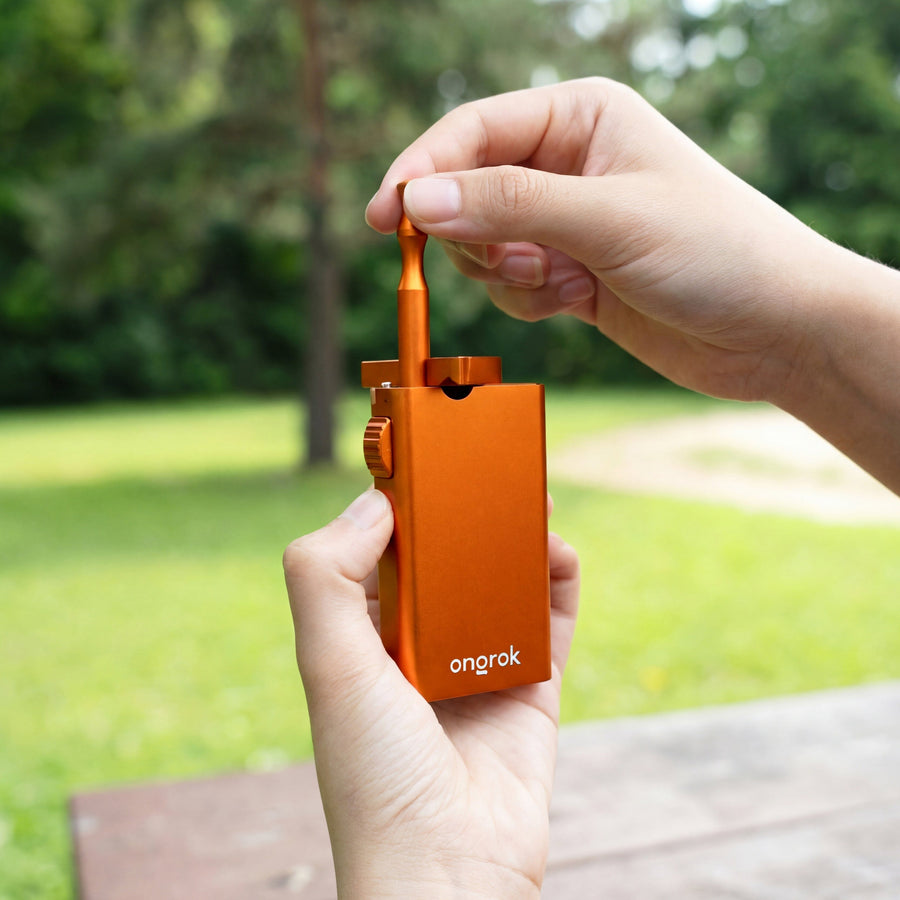
The dugout. The case has two parts to look after. Empty the herb chamber completely and brush out the dust and small bits. A dry brush is usually all it needs. Wipe the slot where the one hitter sits, because that's where residue transfers from the bat. On our Aluminum Dugout One Hitter, the case is aluminum, so a cloth with a little isopropyl is fine. Let it dry before you refill it. On a wooden dugout, keep it dry: brush it out and wipe it, but don't soak it.
The chillum. A chillum is a straight pipe with the bowl at one end, so it cleans like a one hitter. On ours, slide the glass insert out and soak that. The aluminum body gets wiped dry.
If you want the bigger picture on these, our guide on how to use a one hitter and dugout covers packing and use.
How to Clean a Bubbler
A bubbler is a pipe with a small water chamber, and the water is the part that goes bad first. That makes the most important habit a simple one. Empty the water at the end of every session instead of waiting for the next one. Water left standing gets cloudy and starts to smell.
For the deep clean:
- Empty it and take it apart if it comes apart. Our Portable Glass Aluminum Bubbler separates into the glass chamber, the sleeve, the stem, the glass tube and O-rings.
- Clean the glass. Soak it overnight, or fill the chamber partway with isopropyl and coarse salt, cover the openings and shake. The salt reaches parts a brush can't.
- Brush the stem. The narrow tube is where buildup hides. A small nylon brush or a bristled pipe cleaner reaches it.
- Rinse until it runs clear and the alcohol smell is gone.
- Dry the aluminum separately, then put it back together with fresh water.
An all-glass bubbler like the Scandinavian Pocket Bubbler is even simpler. Soak it, rinse it through, and give it fresh water every session.

Which Cleaning Method for Which Material
| Material | Best method | Avoid |
|---|---|---|
| Borosilicate glass | Isopropyl and coarse salt, or an overnight soak in a plant-based cleaner | Sudden hot or cold water |
| Aluminum, including anodized | Isopropyl for at least 20 minutes, pipe cleaners, warm rinse | The All-in-One Cleaner, vinegar soaks, grit on the colored outside |
| Glass inside an aluminum shell | Take apart, clean the glass as glass, wipe the shell | Boiling, or soaking the whole thing assembled |
| Wood (dugout cases) | Dry brush and a wipe | Soaking or alcohol baths |
| Silicone | Warm soapy water, or an overnight soak | Nothing special. It's forgiving. |
Still Dirty After Cleaning?
It happens. Usually it's a pipe that went a long time between cleans.
The bore is still blocked. The alcohol couldn't get in. Open it with a needle tool or a bristled pipe cleaner first, then soak again.
The glass looks cloudy. That's usually a thin film of resin dissolved in alcohol that dried back onto the glass. Rinse again, more thoroughly, with warm water. If the alcohol was already dark, start over with fresh alcohol.
There's a dark ring in the bowl. That's baked-on residue. A second soak and a cotton bud usually get it, and a gentle scrape with a plastic or wooden pick does the rest.
It still smells. Either there's residue left in the airway, or there's still alcohol in it. Rinse it through again and let it dry longer.
What Not to Do
- Don't light a pipe that still smells of alcohol. Let it dry fully.
- Don't move glass straight from hot to cold, or cold to hot. That's how it cracks.
- Don't boil pipes with aluminum shells, O-rings or seals.
- Don't use the All-in-One Cleaner on aluminum.
- Don't mix vinegar and bleach, or any two cleaning products, in the same soak.
- Don't add bleach to an isopropyl soak. That's another dangerous mix.
- Don't soak wooden parts.
- Don't pour used alcohol down the sink near a pilot light or anywhere near a flame.
Keeping a Pipe Clean for Longer
Less buildup means less work when the deep clean comes around. Knock the ash out at the end of every session rather than the start of the next one, and run a pipe cleaner through while the residue is still warm and soft. Keep a screen in the bowl if your pipe takes one, so less ash pulls into the stem. And keep the pipe in a case or a pouch when you carry it, which keeps it clean on the outside and in one piece.
A cleaning kit and an All-in-One Cleaner pouch will keep your glass covered for a while. And if your pipe is past saving, you'll find glass, aluminum and hybrid pieces in our spoon pipe collection and our dugouts and one hitters.
Pipe Cleaning FAQ
What is the best thing to clean a pipe with?
For glass, isopropyl alcohol at 91% or higher with coarse salt, or an overnight soak in a plant-based cleaner if you'd rather skip the alcohol. For aluminum, isopropyl alcohol and pipe cleaners. Whatever you use, a few pipe cleaners and a small brush do the parts a soak can't reach.
Can you clean a pipe with just water?
Not really. Water alone won't dissolve resin. Warm water is for rinsing after a soak. The one exception is a bubbler's water chamber, which you should empty and rinse after every session anyway.
Does vinegar clean glass pipes?
It helps with light buildup. White vinegar with a little baking soda, a soak and a pipe cleaner will loosen fresh residue. It's slower than alcohol and struggles with old resin. Skip it on aluminum, and never mix it with bleach.
Can I boil my glass pipe to clean it?
Borosilicate glass can take it if you're careful. Start it in cold water, bring it up to a simmer slowly and let it cool in the water. Never drop cold glass into boiling water, and never boil anything with an aluminum shell, O-rings or seals. A soak does the same job with less risk.
How do you get resin out of a one hitter?
Open the bore with a needle tool or a bristled pipe cleaner, then soak it. Aluminum one hitters go in isopropyl for at least 20 minutes, glass ones in isopropyl and salt or an overnight soak. Push a pipe cleaner through, rinse with warm water and let it dry.
How often should you clean a pipe?
Run a pipe cleaner through after each session, then do a deep clean about once a week if you use it daily, or every couple of weeks if you don't. If the draw gets harder or it starts to taste stale, it's time, whatever the calendar says.
Can you use the All-in-One Cleaner on aluminum?
We don't recommend it. Use it for the glass parts and clean the aluminum with isopropyl alcohol and pipe cleaners instead. On our glass-and-aluminum pipes, take the glass out and soak that, and wipe the shell.
Can you reuse isopropyl alcohol after cleaning a pipe?
We wouldn't. Once it's dark, it's carrying the resin you just took off, and it won't clean the next pipe well. Seal it in a container and dispose of it the way your area handles solvents.
Is this how you clean a weed pipe?
Several customers tell us these steps work extremely well for that, but it isn't the intended use of our pipes. ONGROK pipes are made for dry herbs. The cleaning itself doesn't change: isopropyl and coarse salt or an overnight soak for glass, isopropyl and pipe cleaners for aluminum, then a warm rinse and a full dry.
ONGROK products are not meant to be used for any illegal purpose.