Grinders
How to Grind Herb Without a Grinder: 7 Methods Compared
By ONGROK TeamUpdated 10 min read

In this guide
Quick answer: The best way to grind herb without a grinder is small, sharp scissors in a shot glass. Snip for about a minute and you get an even, medium grind with very little mess. For bigger amounts, use a sharp knife on a glass or plastic board. Your fingers work in a pinch, and a pill bottle with a coin works on the go. A blade coffee grinder is fine in short one-second pulses, but your coffee will taste of herb afterwards. Doing this more than once? A basic two-piece grinder costs $10 to $15 and fixes the mess and the uneven grind.
You've got everything ready except the grinder. Maybe it's in another bag. Maybe it's at the bottom of a drawer you haven't seen in a year. What you do have is a kitchen, and kitchens are full of things that cut.
Most of them work. Some work a lot better than others, and a couple will leave your kitchen smelling of herb for a week. We make grinders, so yes, we're biased. We'll get to the bit where we suggest buying one. First, here's how each method actually does, including what a coffee grinder does to your coffee, and how to clean up after.
Grinding Without a Grinder: Every Method Compared
There's no perfect substitute. Pick based on what you care about most. Here's how we'd rate them.
| Method | How even | Mess and loss | Smell left behind | Best for |
|---|---|---|---|---|
| Scissors in a shot glass | Good | Low | Low, glass rinses clean | Most situations |
| Knife and cutting board | Good, with patience | Medium, it scatters | High on a wooden board | Larger amounts |
| By hand | Poor, big and small pieces | High, it sticks to your fingers | On your hands | When you have nothing else |
| Pill bottle and a coin | Poor to fair | Medium, fine powder clings to the walls | In the bottle | On the go |
| Blade coffee grinder | Fair, dust and chunks together | Low | High, it carries into your coffee | Big batches, if it's a spare |
| Cheese grater | Fair, only with dry flower | High, it clogs the holes | Medium | Rarely worth it |
| Mortar and pestle | Fair, easy to overdo | Medium | High in wood or unglazed stone | Dry flower, a dedicated mortar |
Evenness matters because small pieces and big pieces burn differently. Fire crews have a name for this. Small, light material is "fine fuel". The US forestry glossary describes it as having "a comparatively high surface area-to-volume ratio", so it ignites readily and burns fast (Forests and Rangelands). Mix dust and chunks in the same bowl and the dust goes first while the chunks barely catch. Grind it evenly and it burns evenly.
Whichever method you pick, work over a sheet of paper or a tray. Some always falls, and paper lets you tip it straight back in.
How to Grind Herb With Scissors and a Shot Glass
This is the one we'd use, and most people settle on it once they've tried the others. The glass keeps everything in one place, so nothing ends up on the counter. You can also see how fine it's getting.

- Break the flower into a few smaller pieces and drop them into a shot glass, or any small glass with straight sides.
- Snip straight down with small, sharp scissors. Kitchen scissors work. Nail scissors work better, because the blades fit the glass. Keep snipping and turn the glass as you go.
- Stop at about a minute and check. Want it finer? Keep going.
- Tip it out and scrape the blades clean with a card. Some of it will have stuck to them.
Sharp blades matter most. Dull scissors crush the flower instead of cutting it, and crushed flower clumps.
How to Grind Herb With a Knife and Cutting Board
Better for more than a pinch at a time. Use a sharp, straight chef's knife and rock it through the flower the way you'd mince herbs for cooking. Skip the serrated knife. It snags sticky flower and smears it across the board.
Think about the board, too. Wood soaks up resin and smell, and you'll find out the next time you chop an onion on it. Use a glass, plastic or metal surface you can wipe clean. Or lay down a sheet of parchment paper first, then fold it into a funnel when you're done.
How to Break Up Flower by Hand
Plenty of people do this, and it works. Pull the flower apart into small pieces with your fingertips, picking out stems as you go. The catch is the one our guide to using a grinder points out. You end up with a mix of big and small pieces, and that mix doesn't pack evenly. Some of the sticky stuff also stays on your fingers. That's flower you don't get to use, and a smell you carry around with you.
Some guides suggest dusting your hands with flour or cornstarch so it doesn't stick. Don't. Whatever's on your fingers ends up in what you're about to use.
How to Grind Herb in a Pill Bottle With a Coin
This is the travel option. Put a little flower in an empty pill bottle with a coin. Wash the coin first, since coins go through a lot of hands. Close the lid and shake it hard for a minute or two. The coin knocks the flower apart against the walls.
The result is coarse and uneven, and you can't see what's happening inside. Fine powder clings to the plastic, so some of it stays in the bottle. Still handy when you're out and the only other option is your fingers.
It does have one thing going for it: the lid keeps the smell in until you open it, which no open-air method can do. For carrying flower around after, our smell proof storage does that job properly.
Kitchen Tools: Coffee Grinder, Grater, Mortar and Blender

Coffee grinder
A blade coffee or spice grinder does the job, and it's quick for a big batch. Control is the hard part. The blades spin so fast you can go from chunks to dust in a couple of seconds. Press the button in one-second taps and check after each one. Fill the cup about a third of the way. Run it nearly empty and a small amount turns straight to powder.
Short pulses also keep it cool. Grinding makes heat. Food engineers point out that "heat is generated when energy is used to fracture a particle into a smaller size" and that it "results in some loss of flavoring and quality" (e-PG Pathshala). Even herbalists who want powder pause between runs. The Herbal Academy runs its grinder for 30 seconds at a time, with "short 15 second breaks between grinding periods to prevent the herbs from becoming too hot" (Herbal Academy).
Stick to a blade grinder. A burr grinder is built for hard, dry beans, and leafy, sticky material can gum it up. Smell is the other problem. Homes & Gardens notes that "coffee grinders retain residual coffee flavor, even after cleaning" (Homes & Gardens). That works both ways. Use the grinder you make your morning coffee with, and your coffee will taste of herb for a while.
Cheese grater
Only use one with dry, firm flower. Go slowly, on the finest side. Anything slightly sticky smears into the holes and stays there. It's also the hardest tool here to clean, because every hole holds a bit of residue. Mind your knuckles.
Mortar and pestle
Press and twist instead of pounding, or you'll end up with powder. It only works with properly dry flower. Homes & Gardens sums it up: a mortar "offers more control over the texture" but "requires more effort." Use glazed ceramic or polished stone, and not the one you cook with. Wood and unglazed stone soak up resin and smell.
Blender or food processor
Skip this one. Blender blades are made for liquids and struggle with a small amount of anything dry. Homes & Gardens says spices ground in a blender come out "very roughly chopped". A little flower in a big jug mostly ends up stuck to the sides.
How Fine Should You Grind It?
Depends what you're putting it in. Our guide to grinder types keeps it simple. Medium is good for rolling. Slightly coarser works better in a pipe, because it lets the air through. Finer isn't always better. Powder packs down tight and clogs a screen.
A dugout is the exception. A one-hitter loads by twisting it into the storage side, so it needs a fine grind. That's why our guide to using a one hitter and dugout says to fill it with finely ground herb. Of the no-grinder methods, scissors get you there best.
Moisture Decides How Every Method Goes
Whatever you use, the flower itself makes a big difference. Too damp and it clumps on whatever touches it. Too dry and every method turns it to dust. For a quick check, use the test from our guide to rehydrating dry flower. Pinch a bud. If it springs back a little, it's fine. If it snaps or turns to powder, it's too dry.
You'll also see people online say to freeze the flower first so it crumbles. We wouldn't. Our guide on whether flower goes bad explains why: cold makes the delicate surface brittle, so it snaps off as dust. Taking it out of the freezer also brings condensation with it.
Cleaning Up After
Scissors, knives, graters and coins all clean up with isopropyl alcohol, 90% or stronger. It's the same thing we use on grinders in our grinder cleaning guide. Wipe them down, or soak them for 20 minutes if they're really sticky. Then wash them with soap before they go back near food. Glass just rinses clean. Don't soak wood at all, since it takes in the liquid. One more reason to skip the wooden board.
When a Cheap Grinder Is Worth It
If this is a one-off, scissors and a shot glass will do. If it's every week, the math is simple. A basic grinder costs about the same as a spare spice grinder and does a better job. It also keeps the smell out of your kitchen.
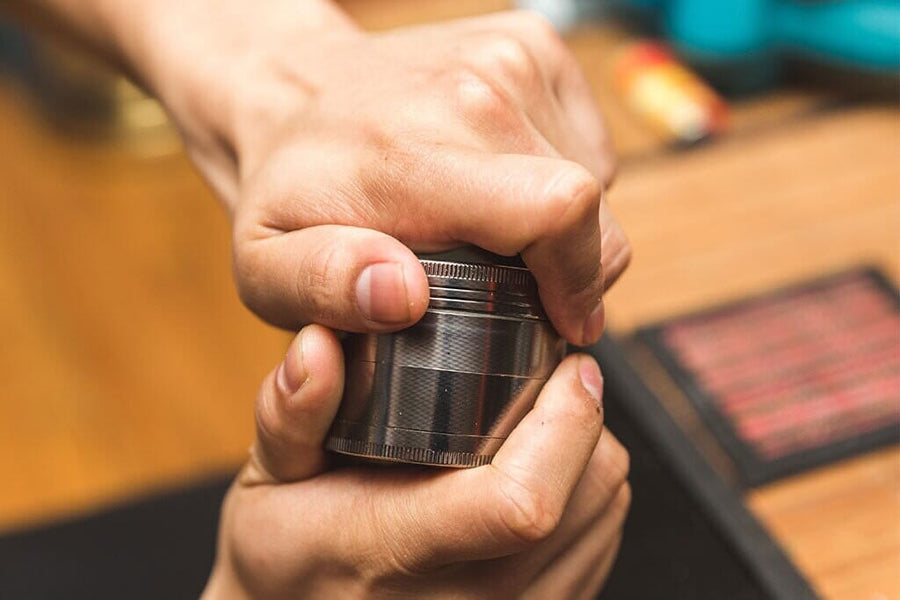
A two-piece grinder fixes what goes wrong with everything above: uneven pieces, sticky fingers and mess. A few twists gets you coarse. A dozen gets you fine. The residue stays on the teeth instead of your fingers. A four-piece adds a screen and a catch chamber underneath to collect the fine powder that sifts through. If you're only replacing a pair of scissors, you don't need that yet.

| Grinder | Pieces | Teeth | Price |
|---|---|---|---|
| Plant-Based Hemp Grinder | 2 | 26 triangular | $9.99 |
| 2 Piece Magnetic Grinder (50mm, aluminum) | 2 | 33 triangular | $14.99 |
| Mini 4 Piece EZ Grinder (55mm) | 4 | 27 triangular | $24.99 |
| Premium 4 Piece EZ Grinder (63mm) | 4 | 33 triangular | $34.99 |
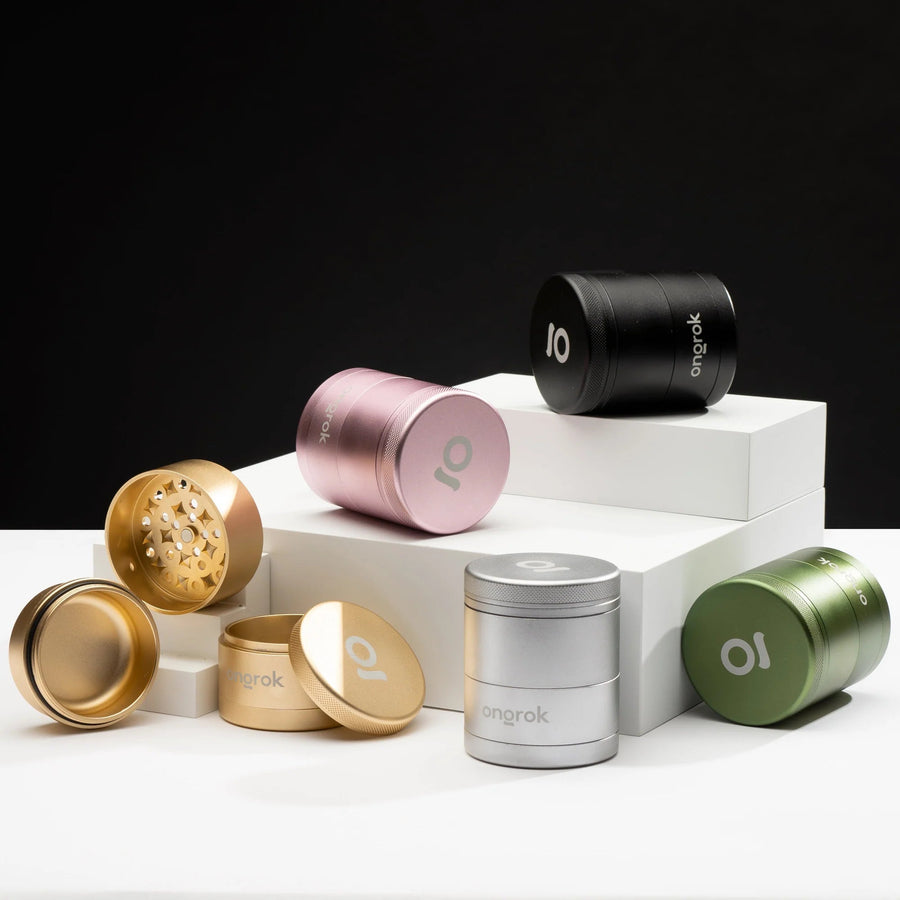
The Plant-Based Hemp Grinder is our least expensive grinder, and it's made almost entirely of hemp. The 2 Piece Magnetic Grinder is the cheapest in aluminum, and a magnet holds the lid shut in your pocket. Want the catch chamber? The Mini 4 Piece EZ keeps all four pieces at 2.2 inches across, and the Premium 4 Piece EZ is our best seller. You'll find the whole range in our herb grinders collection.
Grinding Without a Grinder FAQ
What's the easiest way to grind herb without a grinder?
Scissors in a shot glass. It's quick, and the glass keeps everything in one place so you can see how fine it's getting.
What can I use instead of a grinder?
Small, sharp scissors in a shot glass are the best stand-in. A sharp knife on a glass or plastic board handles bigger amounts, and a pill bottle with a clean coin works on the go. Your fingers will do when there's nothing else.
Can you use a coffee grinder for herbs?
A blade one, yes, in one-second pulses. Not a burr grinder. And expect the next few cups of coffee to taste of what you ground.
Can you grind herb in a blender?
Not well. Blender blades are made for liquids, so a small amount of dry flower mostly gets thrown against the sides. A blade coffee or spice grinder does the same job better.
Is it bad to break up flower with your fingers?
No harm in it, but you lose some. Flower sticks to your fingers, and the uneven pieces don't pack or burn evenly.
How fine should herb be ground for a pipe?
Medium to slightly coarse, so air can pass through. Powder packs down and clogs the bowl. The exception is a dugout one-hitter, which needs it fine.
Do you really need a grinder?
No. But even a cheap one beats every method on this page. Our two-piece grinders start at $9.99 and take less than a minute.
Do these methods work for weed?
People ask us this a lot. The methods are the same for any dried herb, and ONGROK grinders are made for dry herbs, though what you put in them is up to you.
ONGROK products are not meant to be used for any illegal purpose.