Grinders
Are Toothless Grinders Better? How They Work vs Teeth
By Mubashir SiddiqiUpdated 7 min read

In this guide
Quick answer: A toothless grinder is better if your herb is sticky, if you want an even, fluffy grind, or if you're tired of jammed teeth. It mills herb between two ridged plates and doesn't cut it. A grinder with teeth is still simpler, usually cheaper, and comes in smaller sizes. Neither is better for everybody.
The first time you open a toothless grinder, it looks like somebody forgot to finish it. There are no pegs and nothing sharp, just two plates with a pattern of low ridges on them. Then you put some herb in, give it a couple of turns, and it comes out in a soft, even pile, and you start wondering why every grinder isn't made like this.
That's a fair question, and the honest answer is that teeth still do some things better. So let's go through how a toothless grinder actually works, how it compares with a regular one, and who should and shouldn't bother with it.
What Is a Toothless Grinder?
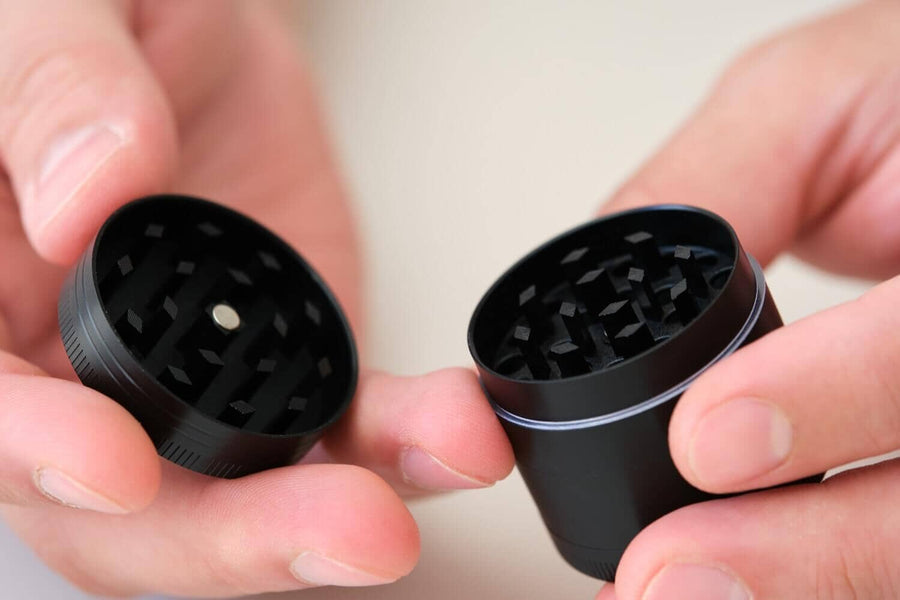
It's a grinder that mills herb and doesn't cut it. A regular grinder has rows of teeth on the lid and the base, and when you twist, those teeth slice and tear the herb between them. A toothless grinder has no teeth at all. It has two plates that face each other, and each one carries raised ridges.
You'll also see it called a teethless grinder, a no-teeth grinder or a mill grinder. They're all the same idea.
How Does a Toothless Grinder Work?
The ridges do the work. On ours they're wedge-shaped and they radiate out from the center like the petals of a flower, which is where the name Flower Petal comes from. When you turn the lid, the herb gets pressed and rolled between the two sets of ridges until the pieces are small enough to drop through the openings in the lower plate.

From there it's the same as any 4 or 5 piece grinder. The milled herb lands on a fine mesh screen, and the finest powder sifts through into a catch chamber underneath. So yes, a toothless grinder still collects kief.
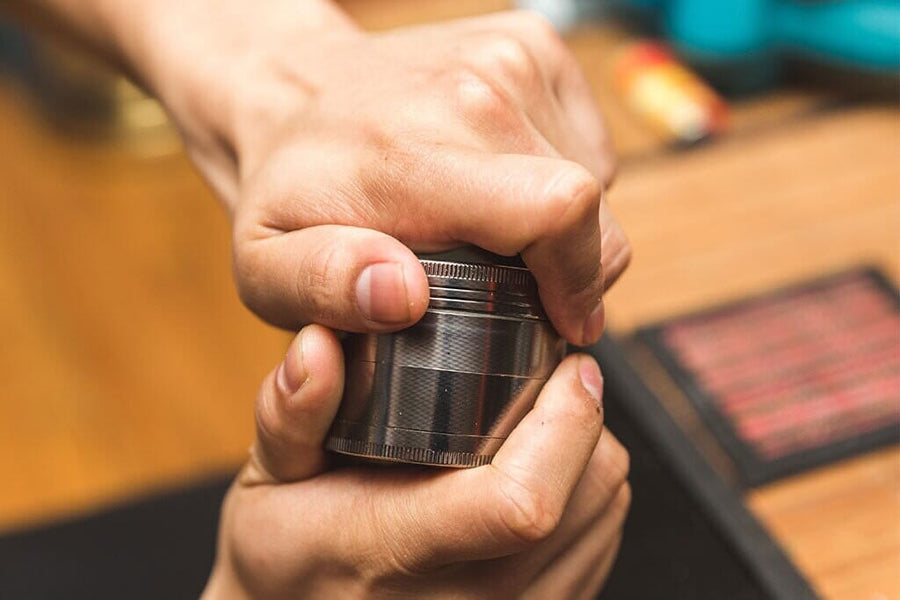
The technique is a little different, though. You fill the chamber loosely and don't pack it. And you turn it steadily, not fast. Because nothing in there cuts, forcing it doesn't speed anything up. It just moves the herb around. Two or three easy turns is usually the whole job.
Toothless Grinder vs Regular Grinder
Here's how the two compare on the things people actually notice.
| Compared on | Toothless | With teeth |
|---|---|---|
| How it breaks herb down | Presses and mills it between ridged plates | Cuts and tears it between teeth |
| What comes out | A fine, even, fluffy mill | A shredded grind, from coarse to fine |
| Sticky herb | Nothing for it to wrap around or jam | Can bind on the teeth |
| Stems | Nothing sharp for a stem to catch on | Get chopped in, or jam the teeth |
| Effort | Two or three steady turns, loosely filled | Eight to twelve turns |
| Learning it | Takes a couple of goes to get the feel | Nothing to learn |
| Price and sizes | Costs a little more, fewer small options | Cheaper, and comes as a pocket 2 piece |
So, Are Toothless Grinders Better?
For some people, clearly yes. For others, not really. It depends on what annoys you about the grinder you've got.
Where toothless is better
The big one is sticky herb. With teeth, sticky herb wraps around the pegs and binds, and that's when the lid stops turning. A toothless grinder has nothing for it to wrap around. That's the reason most people switch, and it's what ours is built for.
The second is the texture. Milling gives you an even, fluffy result and not a mix of shreds and dust. People who roll tend to like that a lot, because an even mill packs evenly. And stems are less of a nuisance. There's nothing sharp for a stem to catch on, so you're not stopping to pick one out of the teeth.
Where teeth are still better
We'd be doing you no favors if we skipped this part. A toothed grinder is more forgiving. You can overfill it, twist it any way you like, and it'll still work. A toothless one asks for a loose fill and a steady hand, and it takes a couple of goes before that feels natural.
Very moist herb is the other thing. Reviewers who've tried a lot of toothless grinders say that herb which is too moist can smear between the plates and not mill properly. That happens with teeth as well, to be fair, but it's worth knowing. If yours is on the damp side, let it dry out a little first.
And there's price and size. A toothless grinder usually costs a bit more than a toothed one with the same number of pieces. If what you want is a small 2 piece for your pocket, you'll be buying one with teeth, because that's how those are made.
Who should get one, and who shouldn't
Get a toothless grinder if your herb is often sticky, if jammed teeth drive you up the wall, or if you roll and care about an even grind. Stick with teeth if you want the simplest tool there is, if you're watching the budget, or if you like setting the grind anywhere from coarse to fine by how long you twist. If you're still weighing up piece counts and sizes, our guide to the types of grinders covers those.
How to Get the Best Out of a Toothless Grinder
Most of the complaints you'll read come down to using one like a toothed grinder. A few habits fix that.
- Fill it loosely. If the herb is packed in, the plates can't roll it.
- Turn steadily, and don't lean on it. Pressure doesn't help.
- Stop after two or three turns and have a look before you do more.
- If the herb is very moist, give it a little time to dry first.
- Brush the plates and the openings every few uses, so the ridges stay clear.
Cleaning tends to be easier than with teeth. The ridges are wide and low, so a brush reaches all of them. The full routine is in our guide on how to clean a grinder, which has a section just for toothless ones.
The ONGROK Toothless Grinders
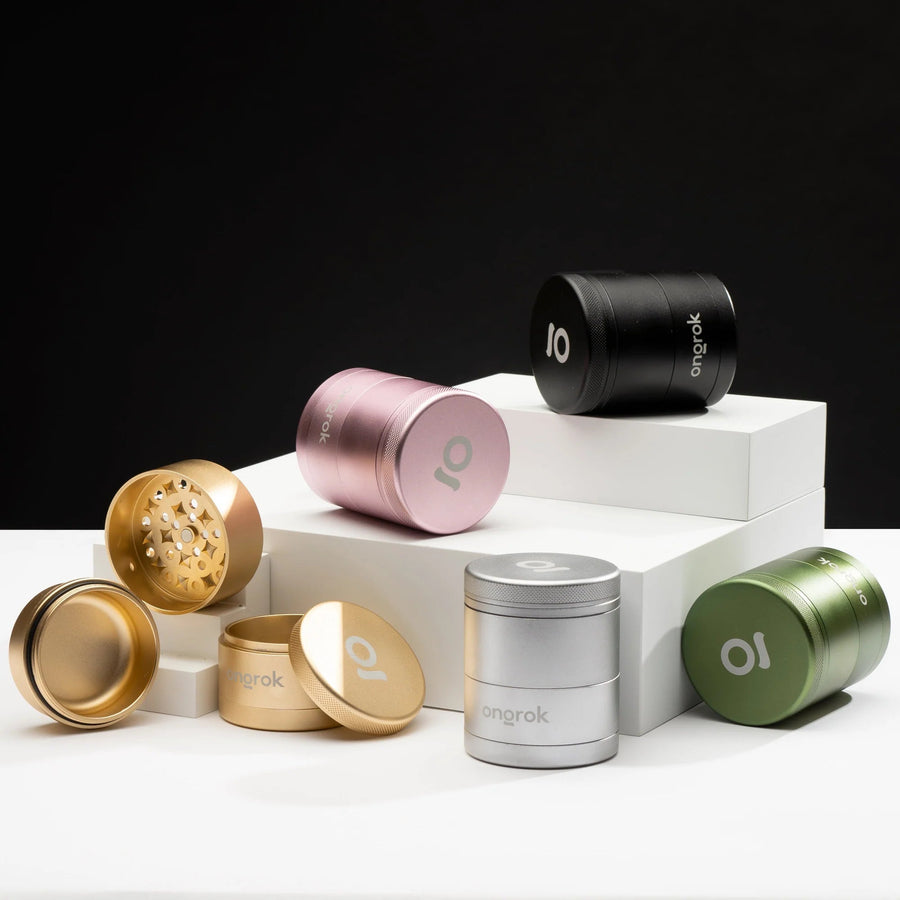
We make two, and they're the same design in two sizes. The 5 Piece Flower Petal Toothless Grinder is the full-size one, 2.5 inches across. It has five pieces: the lid, the milling chamber, a removable mesh screen, a catch chamber, and a storage jar at the bottom with its own airtight lid and O-ring seal.

A quarter turn opens and locks the milling chamber, so you're never forcing a lid against herb that's packed itself in, and a magnet holds the rest of the stack together. It's aircraft-grade aluminum and comes in seven colors. VICE picked it as the best toothless grinder in its 2026 grinder roundup.
The Mini 5 Piece Pocket Grinder is the same thing at 2.2 inches, with all five pieces and the storage jar still in there. You can see both in toothless grinders.
Toothless Grinder FAQ
Are toothless grinders better?
They're better for sticky herb, for an even and fluffy grind, and for avoiding jammed teeth. Grinders with teeth are simpler to use, usually cost less and come in smaller sizes. A toothless grinder suits people who roll or who often deal with sticky herb, and a toothed one suits people who want the most forgiving tool.
How does a toothless grinder work?
It mills herb between two plates. Each plate has raised ridges, and when you turn the lid the herb is pressed and rolled between them until it's small enough to drop through openings in the lower plate. Nothing is cut. Below the plates, a mesh screen and a catch chamber work the same way as in a regular grinder.
What is the difference between a toothless grinder and a regular grinder?
A regular grinder cuts and tears herb with rows of teeth. A toothless grinder presses and mills it between ridged plates. The toothless result is more even and fluffy, and sticky herb has nothing to wrap around. A regular grinder is more forgiving if you overfill it or twist it roughly.
Are toothless grinders worth it?
They're worth it if jammed teeth or sticky herb are a regular problem for you, or if you roll and want an even grind. They usually cost a little more than a toothed grinder with the same number of pieces. If your current grinder never jams and you like the grind you get, there's less reason to switch.
Do toothless grinders work with sticky herb?
Yes, and that's the main reason people buy one. There are no teeth for sticky herb to wrap around, so the lid keeps turning. Herb that's very moist is different. It can smear between the plates, as it can on teeth, so let it dry a little before you mill it.
Do toothless grinders collect kief?
A 4 or 5 piece toothless grinder does. The milled herb lands on a fine mesh screen, and the finest powder sifts through into a catch chamber below. The plates only change how the herb is broken down. Everything underneath them works the same as in a grinder with teeth.
How many turns does a toothless grinder need?
Usually two or three. Fill the chamber loosely and turn steadily, and the herb drops through as it's milled. Turning harder or faster doesn't help, because nothing inside is cutting. If it isn't milling, there's probably too much in the chamber.
Is a toothless grinder good for weed?
Several customers report that our toothless grinders work extremely well for that, but it isn't the intended use. ONGROK grinders are made for dry herbs. How it works is the same whatever you put in it: load it loosely, turn steadily, and it mills between the plates.
ONGROK products are not meant to be used for any illegal purpose.